

Melasma, what is it?
Melasma is a type of pigment spot much larger than the lentigines with geographic borders and usually distributed on cheeks, upper lip and forehead. It usually worsens significantly in summer and with sun exposure.


Melasma is a type of pigment spot much larger than the lentigines with geographic borders and usually distributed on cheeks, upper lip and forehead. It usually worsens significantly in summer and with sun exposure.
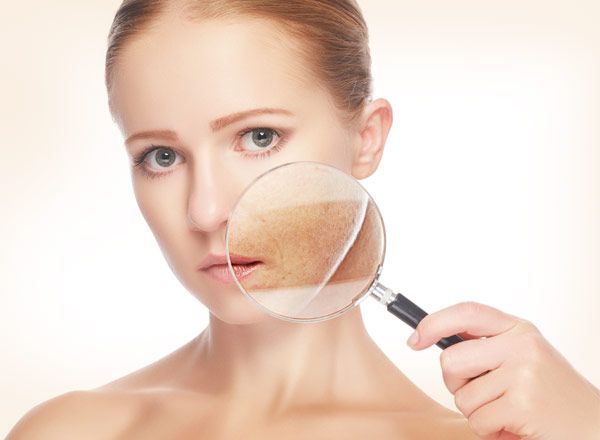

The causes of melasma usually have a hormonal origin in relation to pregnancies, taking hormone treatments or even, thyroid or other endocrine disorders. Once these pigment spots have appeared on the face, we know that they get worse in summer and with sun exposure at any time of the year. Do not forget that the mere fact of exposure to light (at home or outside on cloudy days) also obscures the melasma of the face.

The treatment to clear melasma is complex and long, since it is a chronic pigmentation. Therefore, I always tell my patients that a chronic disorder requires a chronic treatment. The treatment to try clear o minimize these pigment spots can be a monotherapy or a combination of therapies. Thus, we can use laser and / or skin lightener creams along with sun protection factor.
The only laser approved for the treatment of pigment spots melasma type is Fraxel Dual Laser (low dose). Recently, in some cases picosecond lasers are used.
When we apply Fraxel laser to minimize melasma, especially the newest wavelength of this laser, 1927nm, we are renewing the epidermis and therefore, eliminating the epidermal pigment and, in addition, we act in the dermis by renewing the dermis with the deep pigment that is the most difficult. This has been demonstrated with histological studies in biopsies taken on the skin of patients with melasma. It is observed how the epidermal and dermal pigment of the spot of the face is eliminated through the epidermis. It is very important to manage the laser fluences, low parameters, for a good result. Otherwise, strong parameters can irritate the skin and make the melasma worst. Make sure, you are in expert medical hands.
The picosecond lasers, a technological novelty for tattoo removal, have recently incorporated protocols with parameters that are used to treat pigmentation problems or pigment spots such as melasma. Thus, we destroy the brown pigment of the spots, with the same mechanism with which we fragment the ink particles of a tattoo. Progressively we leave the skin without pigment spots and with a uniform tone.
On the other hand, there are skin lightener creams. In the market there are many types of skin lightener creams, mainly composed of acids, vitamin C and hydroquinone. You have to choose the right one in each case depending on your skin type. And always, use high sunscreen cream.
You can treat melasma with laser alone or skin lightener creams alone or combine both treatments. The combination of skin lightener creams after the laser and between each laser session increases the success of the treatment because laser application makes the skin more receptive to skin lightener creams increasing its effectiveness.
Thus, in the treatment of pigment spots such as melasma we apply a combined Fraxel (or picosecond) laser and skin lightener creams protocol. One laser session is performed every 15-30 days (about 4 sessions) followed by the use of skin lightener creams during the entire treatment and the use of these creams is prolonged for 3-6 months. And never forget to apply 50+ sun protection factor.
